Category: Poem

  • Wonders of the Invisible World

    Wonders of the Invisible World

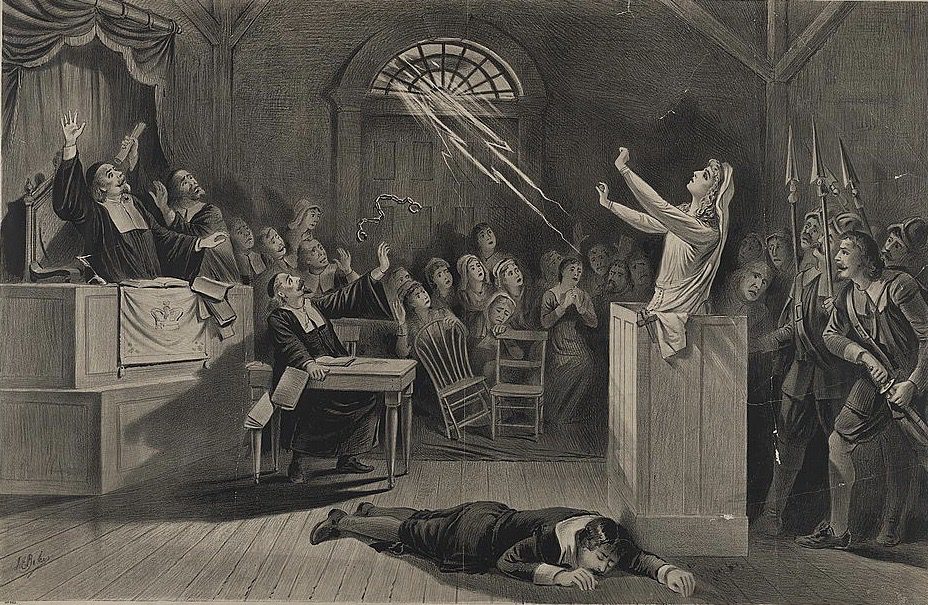
    Back in January I posted a piece about my mother, Venom and Velocity. I wrote about her fascination with tornadoes and what seemed to be her uncanny ability to attract animals, including snakes, and in the most unlikely places. That got me thinking about my 8th great grandmother, Susannah North Martin, who was three times accused of witchcraft between 1669-1692. She was finally found guilty and sentenced to hang on July 19, 1692 in Salem, Massachusetts. I can’t help but think whether my mother, Susannah’s 7th great granddaughter, would have also been suspected of witchcraft during that time because of her ability to talk with the animals. At any rate, I’ve been working on this poem, truly a work-in-progress at this point, but thought I’d share it with you here.

    Susannah wasn’t the only person delivered to the gallows on that day—Sarah Good, Elizabeth Howe, Rebecca Nurse and Sarah Wildes were also hanged.

    Wonders of the Invisible World
    
    “Most impudent, scurrilous, 
    and wicked Wonder of the Invisible World”
    Susannah’s named
    as children gnash and fit 
    bewitched for show
    before her.
    Yet no familiars float
    nor hungry ghosts invade
    their skin despite their
    deceitful shenanigans.
    
    “Explore my flesh for what it’s worth,
    no witch’s teat concealed
    in freckle or on mole
    you’ll find.”
    
    While Mather’s pen
    scabs Salem’s plot;
    in defense Susannah speaks.
    “My thoughts are my own,
    this virtuous and holy life,
    my only sin— 
    not guilty,”
    her only plea.
    
    “Guilty!” 
    came back loud and clear
    and off to jail Susannah went
    until the Nineteenth of July,
    when Good, Howe, Martin, 
    Nurse and Wildes 
    to Proctor’s Ledge were led
    and noosed
    until they hung there dead.
    
    Then tossed below 
    where gallows stand
    into a gaping
    stone crevasse,
    no soil to blanket
    jutting limbs,
    no words of comfort,
    no amens,
    no closing hymns or prayers
    for these so loathed,
    yet held no sin,
    these most impudent, 
    scurrilous, 
    and wicked 
    Wonders of the Invisible World.

    Photo credit: The Witch No. 1, Library of Congress

  • Hold Your Breath

    Hold Your Breath

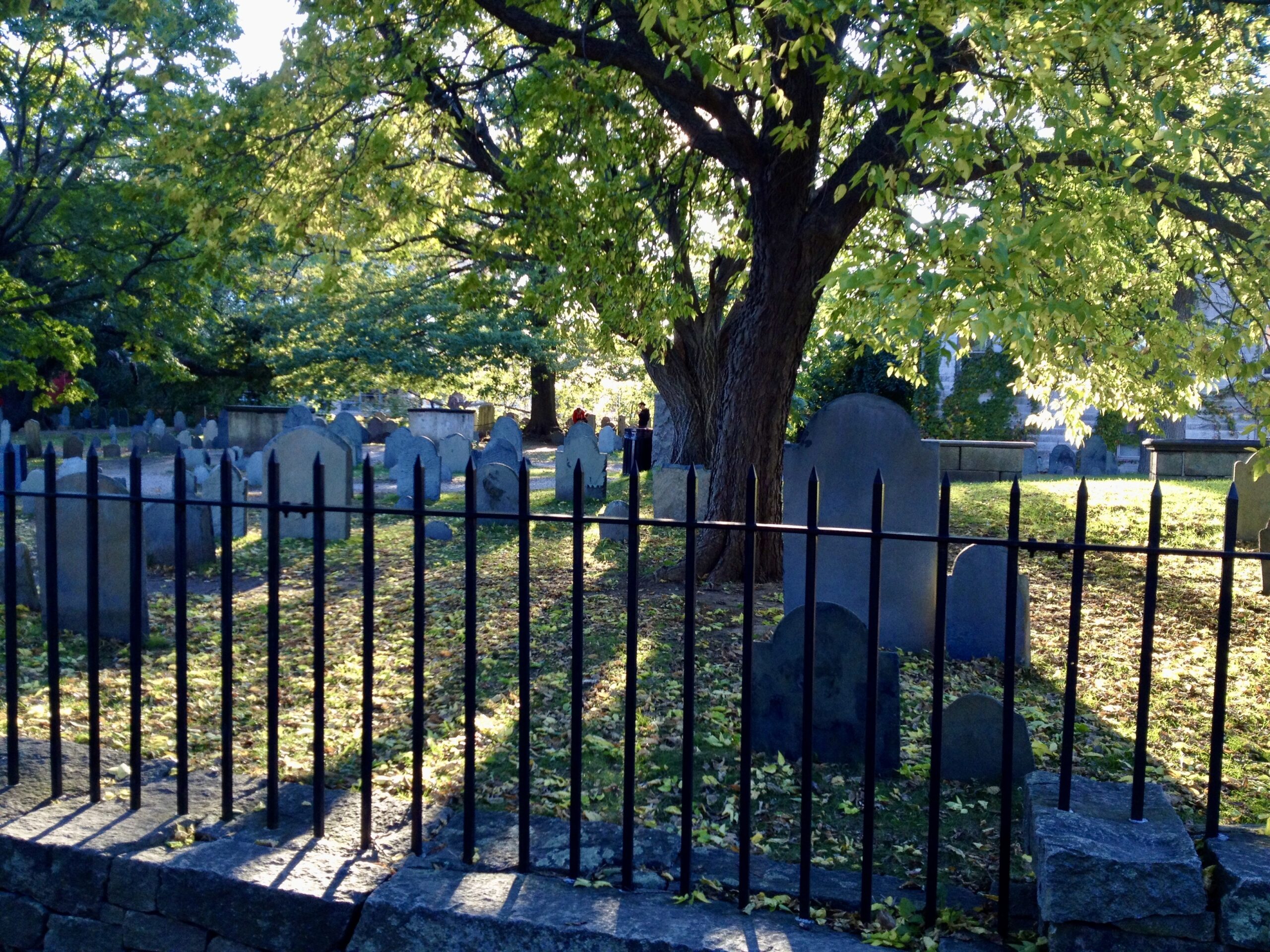
    I went to a small choral music school, Westminster Choir College, during the late 1960s. I enjoyed walking into town leaving the campus and turning right onto Hamilton Street until it became Wiggins. When I passed by Princeton Cemetery, I’d love picking up a stick and running it across the iron fence bars as I walked by, something about the percussive sound and feel of the stick in my hand was reassuring. I also held my breath until I had safely reached the other side of the graveyard. Just in case a parasitic spirit was looking for an unsuspecting host. That cemetery always made me think of my first gin and Wink, a tart cocktail that was offered to me by an upperclassman who lived off campus in a rented boarding house room on Madison Street. One night, loopy after consuming more of the grapefruit flavored potion than I should have, I somehow got turned around as I made my way back to campus and ended up in the cemetery at Aaron Burrs’ grave. Somebody on the sidewalk—it must have been another Choir College student—seeing me on the wrong side of the fence called out, “Westminster’s this way,” and I followed him home.

    Hold
    	your breath
    passing cemetery’s view
    to the corner your safe
    a break
    	would prove
    the first to go
    might well be you
    
    A children’s game
    on a summer afternoon
    as the sun shines through
    	iron
    		fence
    			casting
    				bars 
    on the sidewalk
    
    		—March 1968
  • Theme and Variation on a Pinball Machine in Slow Motion

    Theme and Variation on a Pinball Machine in Slow Motion

    Rediscovered this relic written when I was a college sophomore, when it seemed we were all writing poetry.

    The crowded street
    parts it way
    as a young boy 
    finds his way
    through a dreamlike world
    of games and candy
    
    Down warped steps he goes
    his god to meet
    a nickel in
    and then retreat
    to a world of
    bongs,
    twangs and
    rings
    of misled dreams
    in happy hours
    of childhood
    
    —Fall 1968
  • Touch Hands

    Touch Hands

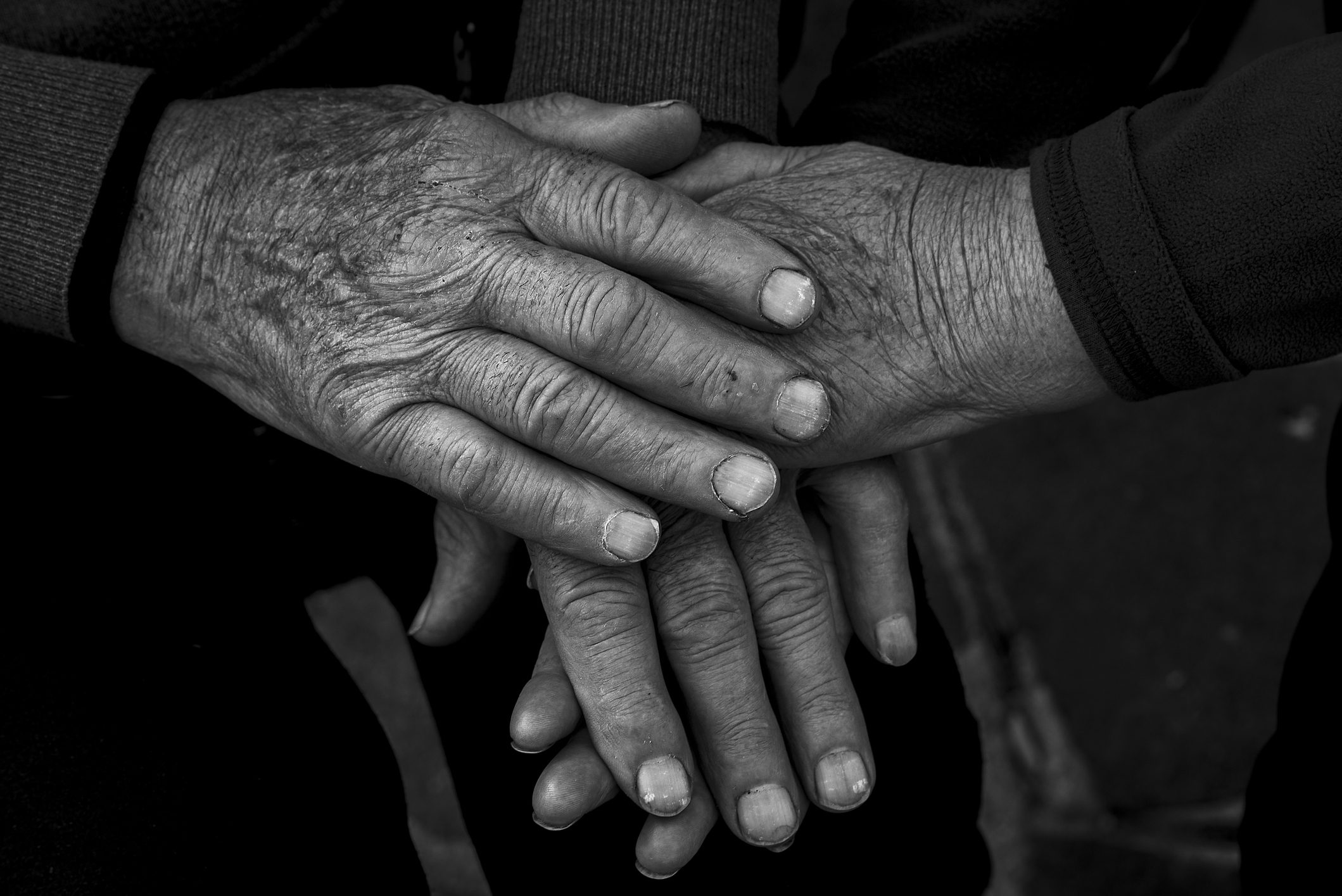
    Sometimes words, whether a poem, a lyric or a piece of prose, can touch us immediately upon hearing them and stay with us forever. This happened to me during a Christmas Eve service at the Unitarian Universalist Congregation of Monmouth County in Lincroft, NJ in 1983. I was serving as the church’s music director, so I was thankful for a break in the many carols, anthems and musical interludes being performed that night when it came time for a unison reading toward the end of the service. The minister at the time, the late Harold R. Dean, led his congregation in a reading of an excerpt from an epilog to a story by William Henry Harrison Murray in his book Christmas in the Adirondacks (1898). As a community we read aloud together… “Ah, friends, dear friends, as years go on and heads get gray, how fast the guest do go! Touch hands, touch hands, with those that stay. Strong hands to weak, old hands to young, around the Christmas board, touch hands.”

    The words resonated with me deeply and the reading passed all too quickly. I needed time to process what we had just recited together before rushing into the next musical selection. Luckily there was a period of silence following the reading, which afforded all of us present a moment to reflect and a chance to take hold of the nearest person’s hand.

    I recently came across Murray’s full epilog, which he originally wrote as prose, and share it with you in verse form below. What a wonderful blessing or toast to share with friends and loved ones when gathered together this holiday season, especially at a time when our civil discourse appears all but dead and we grow weary battling mutant virus variants that plague our world.

    Ah, friends, dear friends,  
    as years go on and heads get gray—  
    how fast the guests do go!  
    Touch hands, touch hands  
    with those that stay.  
    Strong hands to weak,  
    old hands to young,  
    around the Christmas board, touch hands.  
    
    The false forget,  
    the foe forgive,  
    for every guest will go  
    and every fire burn low  
    and cabin empty stand.  
    Forget, forgive,  
    for who may say that Christmas day  
    may ever come to host or guest again.  
    Touch hands.  
    
     —William Henry Harrison Murray

  • To a Hijacker Who Left this Morning

    To a Hijacker Who Left this Morning

    When I lived in Alaska we would often roam the main concourse at Anchorage International Airport at night. You didn’t need a ticket for a flight or a reason to be there. We went because it was a place that you could walk around in in the dead of winter in your shirt sleeves. We also went because there was a decent restaurant that served the best Monte Cristo sandwiches I’d ever tasted.

    One evening, after devouring my Monte Cristo I was approached by a man maybe a little older than me. He asked my group about the need for a proper ID and something about an airline-issued half-fare card. I think the man might have been Dale Lavon Thomas who on the next day, and at gunpoint, hijacked a Wien Consolidated Airlines 737. He demanded to be flown to Havana. A flight attendant on her first solo trip persuaded the hijacker to return to Anchorage to let off the passengers. The plane then headed for Vancouver before flying on to Mexico City with a flight plan ending in Havana. Dale, sometime mid-flight, had decided he wanted a larger, long-range jet and returned to Vancouver where he was arrested by a Royal Canadian Mounted Police inspector.To a Hijacker who Left this Morning I I saw you I think, it was last night and alone your gentle voice, and soft, asked us, our friends, on the value of proper ID for the use of a borrowed but not possessed half-fare card and you were gentle but alone and perhaps I caught some energy from you. I don’t know what your business was so late at the airport and all you said was that you’ll have the bread by morning and could leave. And now I hear the plane has gone to Cuba and I know it was you, don’t ask me how but maybe your questions or maybe you and your gentle voice, and soft, gave you away, but I know. II Seems like things weren’t going your way seems like you don’t always get what you want seems like you’ll never get up and seems like it’s always over but mostly it never really began. Well, friend, I feel for you. —October 18, 1971

    To a Hijacker who Left this Morning
    
    I
    I saw you I think, 
    it was last night and alone 
    your gentle voice, and soft, 
    asked us, our friends, 
    on the value of proper ID
    for the use of a borrowed 
    but not possessed half-fare card
    and you were gentle but alone 
    and perhaps I caught some energy from you.
    
    I don’t know 
    what your business was 
    so late at the airport 
    and all you said was that 
    you’ll have the bread by morning 
    and could leave.
    
    And now I hear the plane 
    has gone to Cuba 
    and I know it was you, 
    don’t ask me how 
    but maybe your questions
    or maybe you and your gentle voice, and soft,
    gave you away, but I know.
    
    II
    Seems like 
    things weren’t going your way
    seems like 
    you don’t always get what you want
    seems like 
    you’ll never get up
    and seems like 
    it’s always over
    but mostly it never really began.
    
    Well, friend, I feel for you.
    
    —October 18, 1971