Blog

  • Stephen Cysewski

    Stephen Cysewski

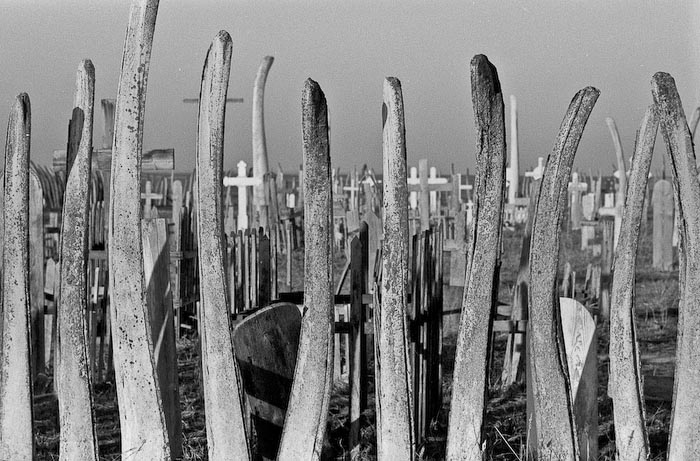
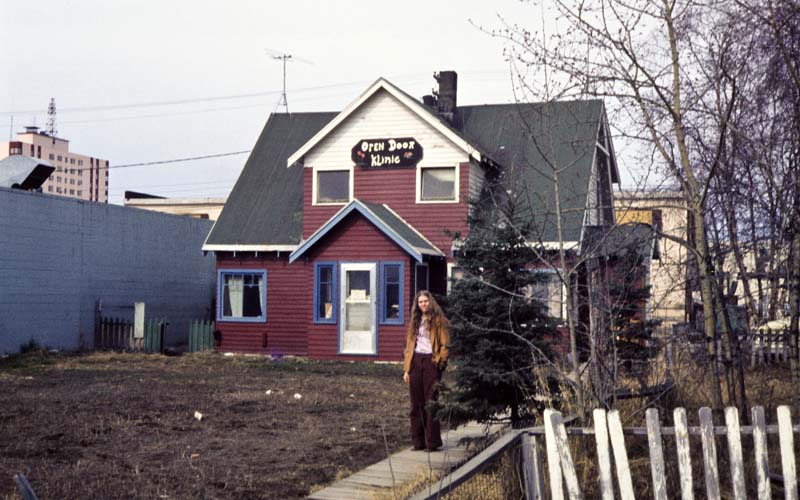
    In 2013 while doing research for Hardship Alaska, my upcoming memoir about serving as a conscientious objector during the Vietnam War, I came across a website featuring hundreds of photographs of Alaska. Of primary interest to me were those from the 1970s capturing life in Anchorage, the state’s largest city, and Point Hope, a small Iñupiaq Arctic village on the northwestern Alaska coast. These two places were where I completed my two years of alternative service in lieu of military duty. The photographs were taken by Stephen Cysewski. These images were important to me because I had lost all my personal photos, with a few exceptions, from not only that time in Alaska but also my entire life, when the Delaware River flooded my Trenton neighborhood in 2006.

    Stephen’s photos portray not only the beauty of Alaska but also its bleakness. His images, especially those of Anchorage, are straightforward, unapologetic, and for me, capture the city as I remember it. His work helped bring clarity to my writing and allowed me to reconstruct the memories of the people and places that had impacted my life some fifty years ago.

    I reached out to Stephen in an email in 2013 after spending more than an hour viewing his images online. In his reply he told me how he hoped “to create places for memories” through his work and to “feel free to share the photographs, my goal is for the photographs to be seen.”

    Now that Hardship Alaska is in the hands of my publisher, Epicenter Press, I’ve been asked to submit ideas for a cover design. I immediately thought of Stephen’s photos and emailed him again to ask if I could share some of his images as reference material with the publisher. The response was not what I had expected when his daughter, Margaret Cysewski Rudolf, answered my email. She told me that her father had passed away last year and that she felt that her dad would be “honored to have you use his images” in influencing the cover design.

    I was saddened by the news and accessed his obituary online where I learned that Stephen had worked with Alaska Children’s Services during the early 1970s, the same organization and period of time that I did during my alternative service assignment. In all probability I had met and maybe even worked alongside Stephen while in Alaska. Funny how life works out like that sometimes.

    I encourage you all to take a look at Stephen’s photographs at cysewski.com and in a wonderful virtual exhibition at the Anchorage Museum. And check out this short Youtube video in Stephen’s own words…

    Photo credit: Point Hope Cemetery by Stephen Cysewski

  • Touch Hands

    Touch Hands

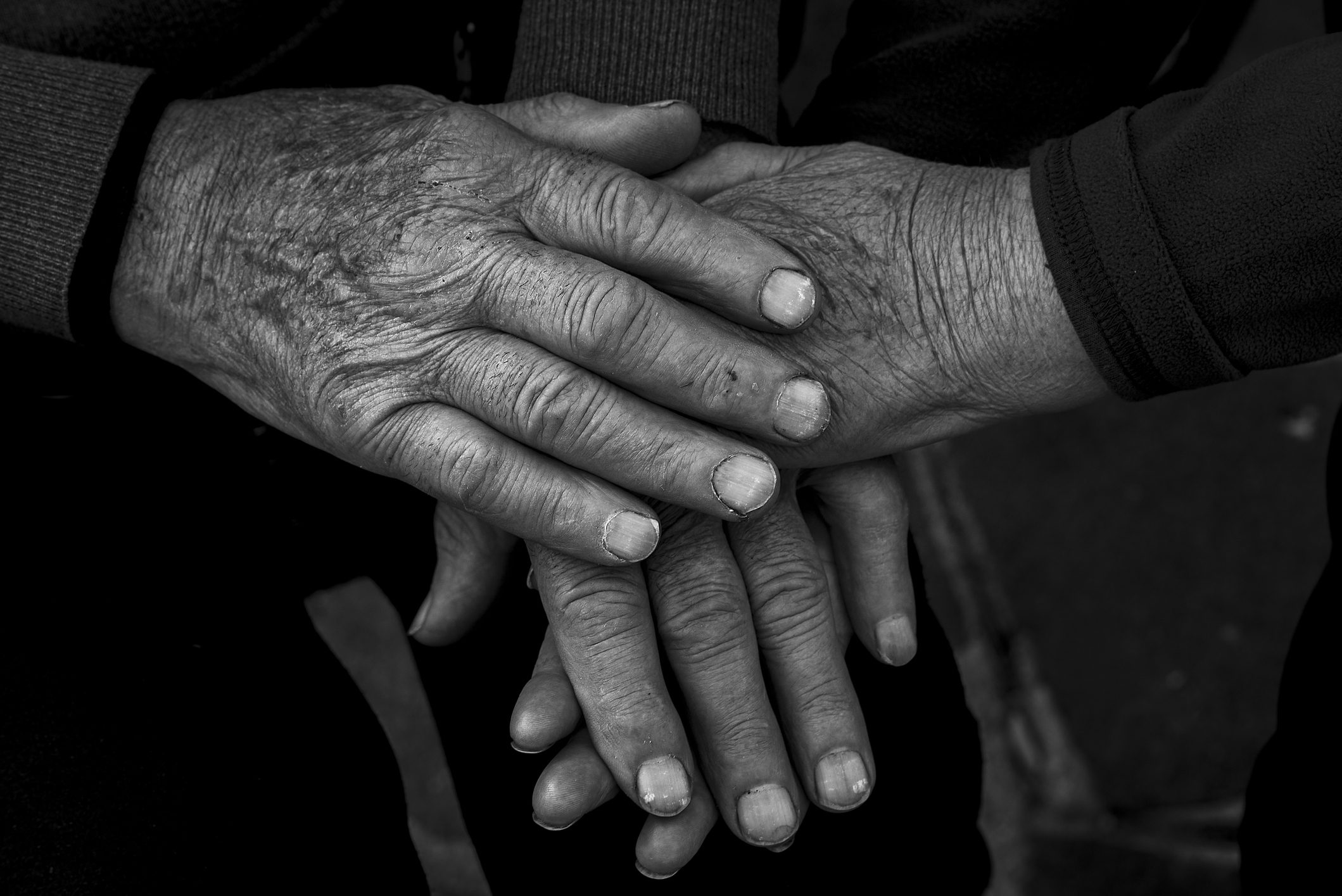
    Sometimes words, whether a poem, a lyric or a piece of prose, can touch us immediately upon hearing them and stay with us forever. This happened to me during a Christmas Eve service at the Unitarian Universalist Congregation of Monmouth County in Lincroft, NJ in 1983. I was serving as the church’s music director, so I was thankful for a break in the many carols, anthems and musical interludes being performed that night when it came time for a unison reading toward the end of the service. The minister at the time, the late Harold R. Dean, led his congregation in a reading of an excerpt from an epilog to a story by William Henry Harrison Murray in his book Christmas in the Adirondacks (1898). As a community we read aloud together… “Ah, friends, dear friends, as years go on and heads get gray, how fast the guest do go! Touch hands, touch hands, with those that stay. Strong hands to weak, old hands to young, around the Christmas board, touch hands.”

    The words resonated with me deeply and the reading passed all too quickly. I needed time to process what we had just recited together before rushing into the next musical selection. Luckily there was a period of silence following the reading, which afforded all of us present a moment to reflect and a chance to take hold of the nearest person’s hand.

    I recently came across Murray’s full epilog, which he originally wrote as prose, and share it with you in verse form below. What a wonderful blessing or toast to share with friends and loved ones when gathered together this holiday season, especially at a time when our civil discourse appears all but dead and we grow weary battling mutant virus variants that plague our world.

    Ah, friends, dear friends,  
    as years go on and heads get gray—  
    how fast the guests do go!  
    Touch hands, touch hands  
    with those that stay.  
    Strong hands to weak,  
    old hands to young,  
    around the Christmas board, touch hands.  
    
    The false forget,  
    the foe forgive,  
    for every guest will go  
    and every fire burn low  
    and cabin empty stand.  
    Forget, forgive,  
    for who may say that Christmas day  
    may ever come to host or guest again.  
    Touch hands.  
    
     —William Henry Harrison Murray

  • Thanksgiving

    Thanksgiving

    My upcoming memoir from Epicenter Press, Hardship Alaska, chronicles the events, people and places immediately leading up to and during my time serving as a Vietnam War era conscientious objector. The heart of the story focuses on my two years of alternative civilian service working in and around Anchorage Alaska. My assigned duty initially had me working in emergency shelters, group homes and residential treatment centers for kids in crisis. I arrived at Anchorage Children’s Christian Home on Halloween night, 1970. Even though I was surrounded by the children in my care and the adults I worked with, my feelings of isolation and loneliness took center stage, especially as my first Thanksgiving away from home neared. I wrote Herb Chamberlain, my former college roommate, about the upcoming holidays and how much I feared being alone at that time of the year. But to my surprise, I discovered the opposite. Here’s an excerpt from the book about that first Thanksgiving away from home.

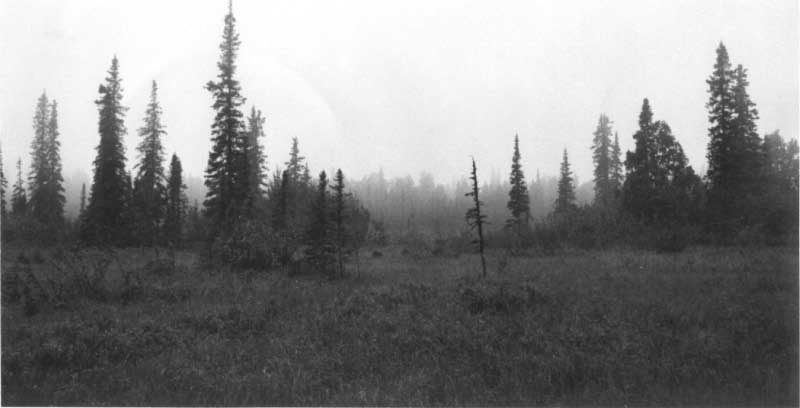
    Photo credit: Stephen Cysewski

    I wrote Herbie on Wednesday, November 25, 1970, just a few weeks into my alternative service assignment that, “Thanksgiving will be hard away from home… But, Christmas will be the worse of the two—I will be working. I do not wish to be alone. I may even spend the night at the receiving home. Oh, well, there are better things to think about other than loneliness.”
    
    The next day, which I assumed would be less than a special holiday away from my family turned out to be one of the best Thanksgivings ever.
    
    A group of us from Alaska Children’s Services were invited to spend the day at one of the administrator’s homes. We had staff and kids from a couple of the group homes, many of us away from our families both here in Alaska and the Lower 48. And for more than a few of us, it was not our choice.  We went ice skating from midmorning to around three that afternoon. The house backed onto a large lake, and now that it had completely frozen over, it became an extension of the backyard. It was a large gathering with the administrator’s family, his neighbors and the rest of us.
    
    We stopped a couple times for hot chocolate and to warm up a bit. On one break someone had put on the 1959 recording of Beethoven’s Ninth Symphony conducted by Bruno Walter with the Columbia Symphony Orchestra and Westminster Symphonic Choir. A great recording, which sent me into reveries of being back East, Westminster Choir College and home. The Ninth was a particular favorite of mine ever since last spring when we performed it with Leopold Stokowski and the American Symphony at Carnegie Hall.
    
    While skating I met an 8-year-old neighbor’s kid who asked if I wanted to take a ride with him on his snow machine. There were a few snow machines idling at the shore along with motorcycles that would regularly scoot off with their riders laughing and whooping across the frozen surface of the lake. The ride was exhilarating, and I marveled at my young chauffeur’s skill at handling the machine.  It was a great ride and when we returned to the house, I thanked my diminutive driver and told him how much fun I had riding with him.
    
    At 4:00 we went inside, tossing our winter gear in a guest bedroom, and joined the family for their Thanksgiving feast. There were so many of us that the meal needed to be served buffet style. We’d never fit around our host’s dining table. We grabbed plates, silverware and napkins and loaded our plates with strips of Alaskan salmon candy, slices of roast caribou, reindeer sausage and foods I was more familiar with back home—turkey, sweet potatoes and the rest.
    
    After the meal, we said our goodbyes and headed back to the girls group home to play board games and then went tobogganing until after 10:00 p.m. The whole day was great fun and I was deeply thankful to have been included in this wonderful celebration.
    
    Riding on my Thanksgiving high, the next morning I went off with Lucille, the lead counselor at the girls group home, and we each bought a pair of cross country skis, poles, boots and wax to keep the base of the skis slick. The winter in Alaska would not keep me trapped inside under an electric blanket. I was going to make the most of the next two years.

  • I’m Not Karl!

    I’m Not Karl!

    Here’s a sneak peak at a chapter, one that’s a bit eerie and quirky, from Hardship Alaska, my memoir coming soon from Epicenter Press about serving out my alternative service as a conscientious objector in the wilds of Alaska during the Vietnam War.

    I somehow fell into the company of an odd group of men. Their oddity only came to light when I found myself hanging with them in the basement apartment of a plump middle-aged man who resembled a character out of a Dickens’ novel, the kind you should most likely avoid; not like a Fagin, but more like a Bumble or Sowerberry. Housing in Anchorage was expensive and to find someplace cheap meant settling for shared, cramped and often dismal spaces, like this windowless basement room in someone’s private home. He wore a cape… all the time. When he pulled it closed around his tumescent middle you could see the sloppy spattered remnants of a recent meal’s bolus that had dribbled down the garment’s front. The stains reminded me of the food-soiled commoners or scholars gowns worn by Princeton students in a dining hall I stumbled into by accident one evening while wandering the campus in the late sixties. His two companions, now that I look back, were perhaps more concerning, in that they never seemed to question the Capeman’s ideas or actions. They reminded me of henchmen following their boss’s orders in carrying out some shady scheme.
    
    I must have met this crew a few months after arriving in Alaska when I was still working in emergency shelters and adolescent group homes for kids in crisis, my Selective Service alternative work assignment, before my time working with the people of St. Mary’s Episcopal Church in June 1971. I say this because, once I found myself involved with the church, my circle of friends seemed to improve. More than likely I came to know these men after attending a community theater performance, which they were either acting in or patrons of, maybe it was in January. They seemed to take an interest in me for some reason—I don’t remember if I was being flirtatious or merely looking lost—after the performance had ended and while attending a small meet-and-greet with the cast and crew. We were chatting about the Anchorage theater scene when the Capeman suggested we continue our conversation in a more private setting as the building we were in was about to close for the night. I followed them back to the Capeman’s apartment. I missed that part of my life and thought that becoming active in community theater again would be good for me, something to help remedy the long darkness of the Alaskan winter and the emotional stress I’d accumulate each day while working at one of the city’s emergency shelters or group homes. Maybe befriending these three would give me a better chance at joining the company. But once I got to the Capeman’s apartment, things turned weird.
    
    These three believed they were reincarnated friends and relatives of Beethoven and divinely brought together to finish writing his Tenth Symphony, a work that Beethoven had begun composing prior to his death but never completed. When they were talking to me about this project in the Capeman’s cluttered one-room, dungeon-like basement apartment, they mumbled something about the Curse of the Ninth. The long-forgotten rumor was most likely spread by Gustav Mahler about how a handful of Romantic era composers had died once they had finished writing a ninth symphony. Turns out it was all fabricated by Mahler. He was obsessed with the idea and even seemed to believe it. After he composed his eighth symphony and before starting his ninth, Mahler decided to write a symphonic-like work for two singers and orchestra, Das Lied von der Erde, thinking he’d be able to out smart the curse. The opus was to be a decoy to distract the curse. When it was completed, he then wrote his ninth symphony. He died anyway while composing his tenth.
    
    At any rate, the trio exposed their outrageous plot to me around a small wobbly coffee table surrounded by stacks of books, piles of classical records, discarded clothes and a random assortment of junk, all while sipping glasses of cheap sherry and nibbling on stale Ritz crackers. The Capeman said they’d been waiting for me to join them as the missing link they needed in order to realize a finished Beethoven’s Tenth Symphony. I had never met these three before, so found it unfathomable that they’d been waiting specifically for me. I think anyone that they would have encountered that night in the theater’s lobby, and who had the misfortune of following them home, would have heard the same tale. They thought I was the reincarnated spirit of Karl van Beethoven, the composer’s nephew, who Beethoven fought over in a contentious custody battle with his brother’s widow. I knew the story, having read the account in a Beethoven biography while a student at Westminster Choir College. 
    
    And although my mother occasionally talked about being reincarnated, I’m not sure I was ready to believe that line of thinking just yet. I do recall during my early twenties, however, of having a recurring dream, a nightmare really, of living in Vienna in the mid-1840s and waking up at the exact moment I was about to cross a street and be crushed to death by a quick-paced horse-drawn streetcar. But I didn’t think I was Karl in that dream. He died in 1851 from liver disease not from a tram accident. 
    
    With Karl supposedly residing in my body, the trio felt they’d have the power to reach out to the maestro himself, who would then feed the needed musical notes to the Capeman, or rather me as the musician in the room, from the great beyond, capturing fragments of leitmotifs in what sounded to me as an unlikely Ouija-like dictation process.
    
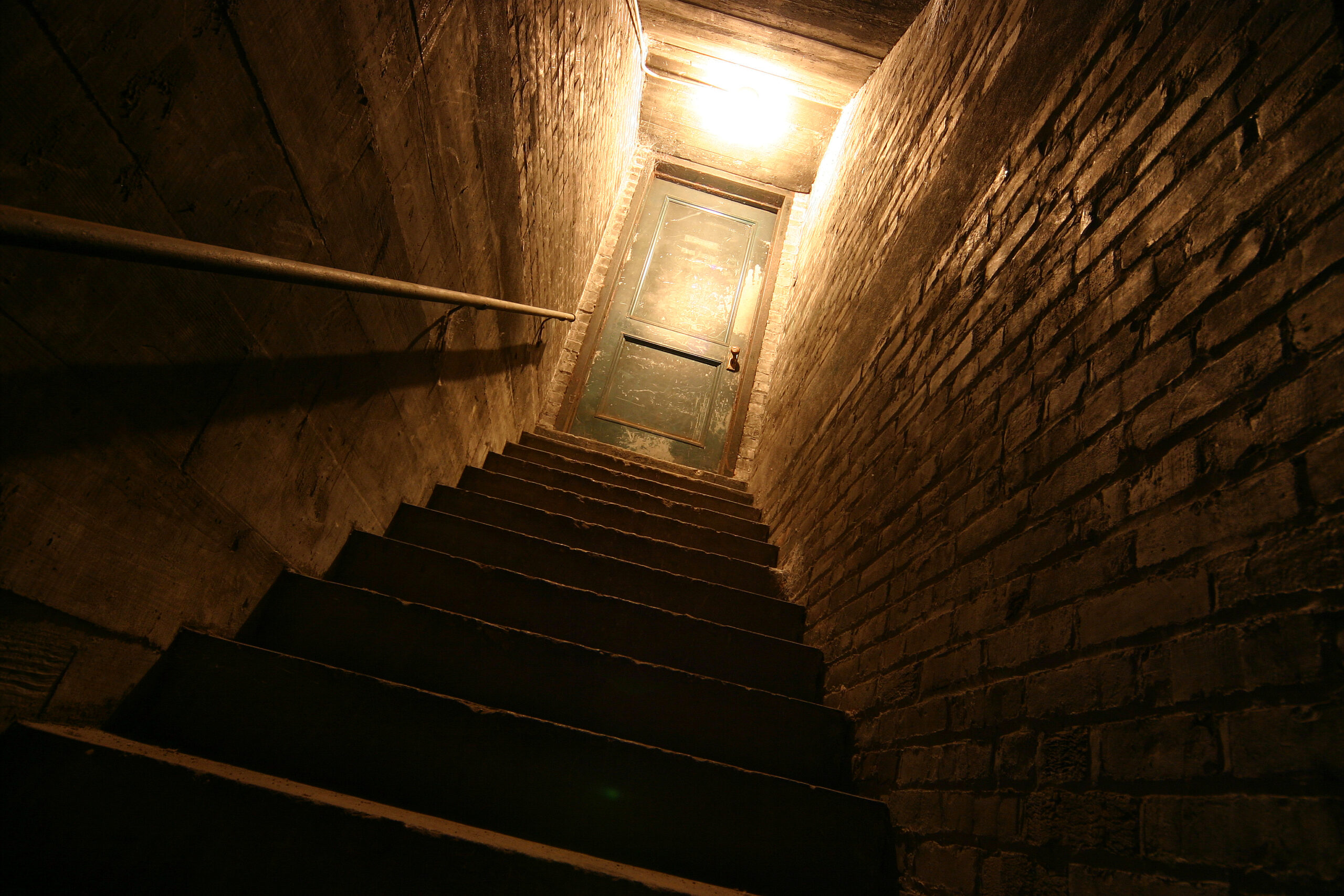
    One part of me, the small crazy part, was flattered, even though I wondered why Ludwig himself hadn’t opted to invade my body. The rest of me was scared out of my mind as I scanned the room for an exit, hoping desperately that the only door in the room was unlocked. I eyed the door with its concealed narrow staircase hiding behind it and waited for a lull in the conversation in order to make my escape. The lull arrived and I offered my thanks to the Capeman and his little friends for their hospitality and a no thanks to the offer of helping them, stating strongly, “I am not Karl!”, and bolted out the door, up the stairs and into the bleak midwinter’s night and freedom.
    
    As I drove back to my apartment, I heard my mother’s familiar warning about strangers in a strange land and how she worried that I’d be cannibalized when I least expected it. I considered finding an exorcist to cleanse my soul, but instead decided that maybe community theater wasn’t what I needed in my life right then.

  • To a Hijacker Who Left this Morning

    To a Hijacker Who Left this Morning

    When I lived in Alaska we would often roam the main concourse at Anchorage International Airport at night. You didn’t need a ticket for a flight or a reason to be there. We went because it was a place that you could walk around in in the dead of winter in your shirt sleeves. We also went because there was a decent restaurant that served the best Monte Cristo sandwiches I’d ever tasted.

    One evening, after devouring my Monte Cristo I was approached by a man maybe a little older than me. He asked my group about the need for a proper ID and something about an airline-issued half-fare card. I think the man might have been Dale Lavon Thomas who on the next day, and at gunpoint, hijacked a Wien Consolidated Airlines 737. He demanded to be flown to Havana. A flight attendant on her first solo trip persuaded the hijacker to return to Anchorage to let off the passengers. The plane then headed for Vancouver before flying on to Mexico City with a flight plan ending in Havana. Dale, sometime mid-flight, had decided he wanted a larger, long-range jet and returned to Vancouver where he was arrested by a Royal Canadian Mounted Police inspector.To a Hijacker who Left this Morning I I saw you I think, it was last night and alone your gentle voice, and soft, asked us, our friends, on the value of proper ID for the use of a borrowed but not possessed half-fare card and you were gentle but alone and perhaps I caught some energy from you. I don’t know what your business was so late at the airport and all you said was that you’ll have the bread by morning and could leave. And now I hear the plane has gone to Cuba and I know it was you, don’t ask me how but maybe your questions or maybe you and your gentle voice, and soft, gave you away, but I know. II Seems like things weren’t going your way seems like you don’t always get what you want seems like you’ll never get up and seems like it’s always over but mostly it never really began. Well, friend, I feel for you. —October 18, 1971

    To a Hijacker who Left this Morning
    
    I
    I saw you I think, 
    it was last night and alone 
    your gentle voice, and soft, 
    asked us, our friends, 
    on the value of proper ID
    for the use of a borrowed 
    but not possessed half-fare card
    and you were gentle but alone 
    and perhaps I caught some energy from you.
    
    I don’t know 
    what your business was 
    so late at the airport 
    and all you said was that 
    you’ll have the bread by morning 
    and could leave.
    
    And now I hear the plane 
    has gone to Cuba 
    and I know it was you, 
    don’t ask me how 
    but maybe your questions
    or maybe you and your gentle voice, and soft,
    gave you away, but I know.
    
    II
    Seems like 
    things weren’t going your way
    seems like 
    you don’t always get what you want
    seems like 
    you’ll never get up
    and seems like 
    it’s always over
    but mostly it never really began.
    
    Well, friend, I feel for you.
    
    —October 18, 1971