Blog

  • Theme and Variation on a Pinball Machine in Slow Motion

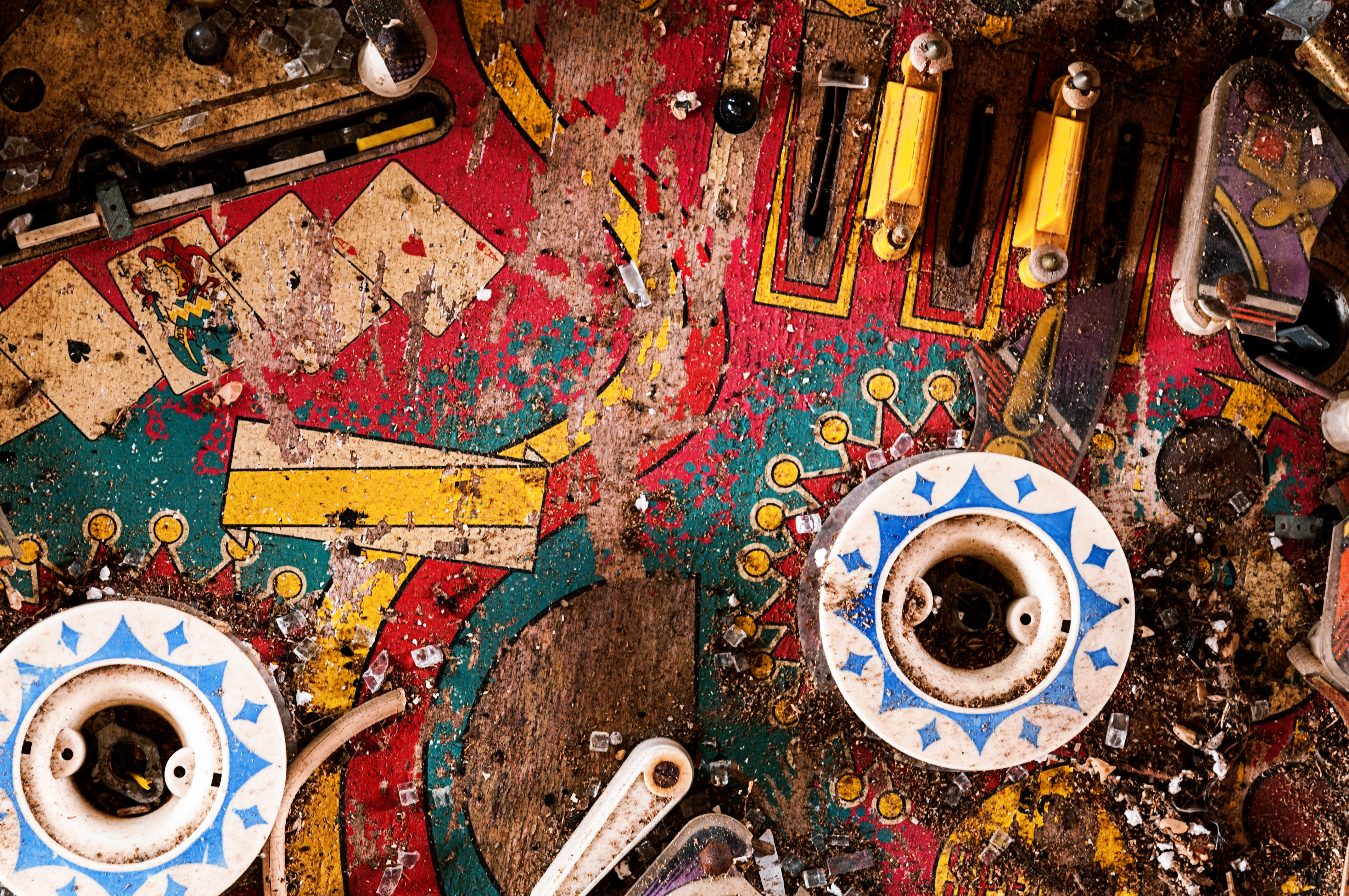
    Theme and Variation on a Pinball Machine in Slow Motion

    Rediscovered this relic written when I was a college sophomore, when it seemed we were all writing poetry.

    The crowded street
    parts it way
    as a young boy 
    finds his way
    through a dreamlike world
    of games and candy
    
    Down warped steps he goes
    his god to meet
    a nickel in
    and then retreat
    to a world of
    bongs,
    twangs and
    rings
    of misled dreams
    in happy hours
    of childhood
    
    —Fall 1968
  • Venom and Velocity

    My mother moved in mysterious ways…

    My mother had a thing for snakes and tornados. Somewhat similar in shape, one horizontally inclined, and the other displaying vertical superiority dropping from clouds above. My mother knew snakes, the garden variety which lived tucked away in the stone fence of our rural Massachusetts’ home. Tornadoes, on the other hand, were a rare New England occurrence. I can only remember one when I was a child that hit nearby Worcester in 1953 and which people talked about with a sense of doom for years after. But here in our new town outside Chicago, when the weather conditions were right and held a promise for change, my mother became obsessed with them. When the sky would turn that greenish hue and air unmoving, she would go, binoculars in hand, to the southwest corner of the yard and stand, waiting, alongside endless rows of corn. She'd usually beat the town's siren, remaining in harms way long after the alarm had sounded. I, on the other hand, took shelter by the piano, the heaviest object in the house; we had no basement to seek shelter in. I'd wear a yellow hard hat borrowed from my father's work site and held onto one wooden piano leg for dear life. This became my personal safety protocol just in case the cyclone and my mother shot through the living room leaving a wake of debris as they blew by.
    
    And while this scene was repeated regularly, especially in the late spring, nothing ever touched down, no path was ever carved through our yard during those two years we lived there. There was something about her waiting, though, scanning the horizon for signs of a coming storm that defined her. A dark anticipation about life, her's, mine, all of ours, that marked her with a certain otherness that both attracted and repelled the dangers of the world.
    
    Snakes, on the other hand, were frequent visitors, silently appearing when least expected. My mother encountered them most but she was no ophidiophile. It seemed, rather than her seeking them out, they found her. Sometimes they'd be waiting for her in the basement of an old Pennsylvania farm house on the side of a hill we rented after leaving Illinois. Some were harmless, the smaller green ones, and others not as familiar, were large and black. This was the house where the stone foundation was beginning to show an unusual deterioration: cracking, crumbling, collapsing and falling to pieces for no apparent reason.
    
    Moving to a new house in the next town over was a solution, my father thought, that would end our serpent infestation as well as residing in a structure that seemed to be ready to slide off the hill. But once settled in, the problem seemed to have followed us. It seemed to intensify. Now snake sightings happened in the first floor hallway and kitchen. And beneath the house there appeared to be sets of claw marks, evidence of scratching and digging along earthen walls in a crawl space off the basement and discovered by an unsuspecting plumber who thought it a sign of the beast. He quit after his discovery.
    
    It was at this time that my mother's simple act of standing on the back porch signaled deer from the surrounding woods to approach the house, it seemed, just to be in her presence. Maybe they had come to offer a gentle counter to the perceived evil of indoor snake sightings or maybe it had something to do with the crawl space claw marks. At any rate, the arrival of the herd was a much better alternative to serpents and demons or even tornadoes for that matter. t once settled in, the problem seemed to have followed us. It seemed to intensify. Now snake sightings happened in the first floor hallway and kitchen. And beneath the house there appeared to be sets of claw marks, evidence of scratching and digging along earthen walls in a crawl space off the basement and discovered by an unsuspecting plumber who thought it a sign of the beast. He quit after his discovery.
    
    It was at this time that my mother's simple act of standing on the back porch signaled deer from the surrounding woods to approach the house, it seemed, just to be in her presence. Maybe they had come to offer a gentle counter to the perceived evil of indoor snake sightings or maybe it had something to do with the crawl space claw marks. At any rate, the arrival of the herd was a much better alternative to serpents and demons or even tornadoes for that matter. 
  • Remembering Desmond Tutu, 1931-2021

    Remembering Desmond Tutu, 1931-2021

    As a high school principal, I often sought out smaller alternative gatherings and workshops that dealt with building meaningful communities, whether in neighborhoods, schools or corporations, rather than attending the larger conferences and conventions for educators and school leaders. At one such event offered by the Bali Institute for Global Renewal in 2006, one hundred attendees gathered outside an old temple compound now serving as an art museum. Archbishop Desmond Tutu was among us and gave what he said was his one and only sermon, one based on the tenets of human rights. He said he’d given it hundreds of times before. He did add, however, that he felt that more needed to be done for the civil rights of LGBTQ people throughout the world. I was impressed that he made that statement and that I was there to hear it, especially since we were in Indonesia, a nation known for its intolerance toward gay people. He ended his remarks by saying that with so many pretty people here, we should all go dancing and with that said, the afternoon’s activities came to an end and we all went dancing. 

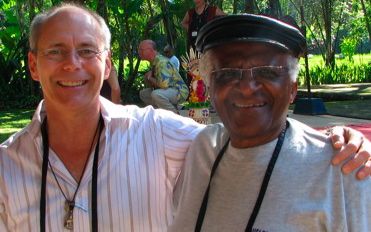
    Later that day I was asked to escort an older woman to a small gathering of the institute’s founders for cocktails and dinner at a lush tropical hotel hanging off a cliff which looked out over tiered rice paddies and waterfalls. The woman had slipped and fallen earlier in the day on the polished floor of the old temple turned museum. She asked if I would help her in and out of the hired van or when moving between rooms at the event as a precaution. As the evening progressed, and sometime after cocktails and before dinner, I found myself sitting alone on a tapestried couch surrounded by Balinese art and sculpture. It was nice to have this quiet time away from the reception’s chatter. And then, Desmond Tutu came into the room and asked if I minded if he sat down beside me. He, too, was looking for a quiet place to rest before the meal. He had changed out of his gray t-shirt which he’d worn most of the day into a button-up splashed with swirls of wild colors. He still wore his trademark cap: charcoal gray wool with woven braid fastened across the band above the short brim. It resembled a modified cadet cap, squat and with a flattened crown and reminded me of the one once worn by Chairman Mao.

    I told him how much I appreciated his remarks that afternoon. I told him I was a high school principal who was gay and out to his students, faculty, school board and community. We talked awhile longer and were interrupted by distant chimes signaling that it was time to make our way to dinner. Desmond leaned over and took my hand in his and said, “You are carrying God within you and I am carrying God within me, and because we all carry God within us we are special people, and it’s important that we act that way. Please continue to do the work that you do, we need it now in the world more than ever.”

  • Planet of the Apes

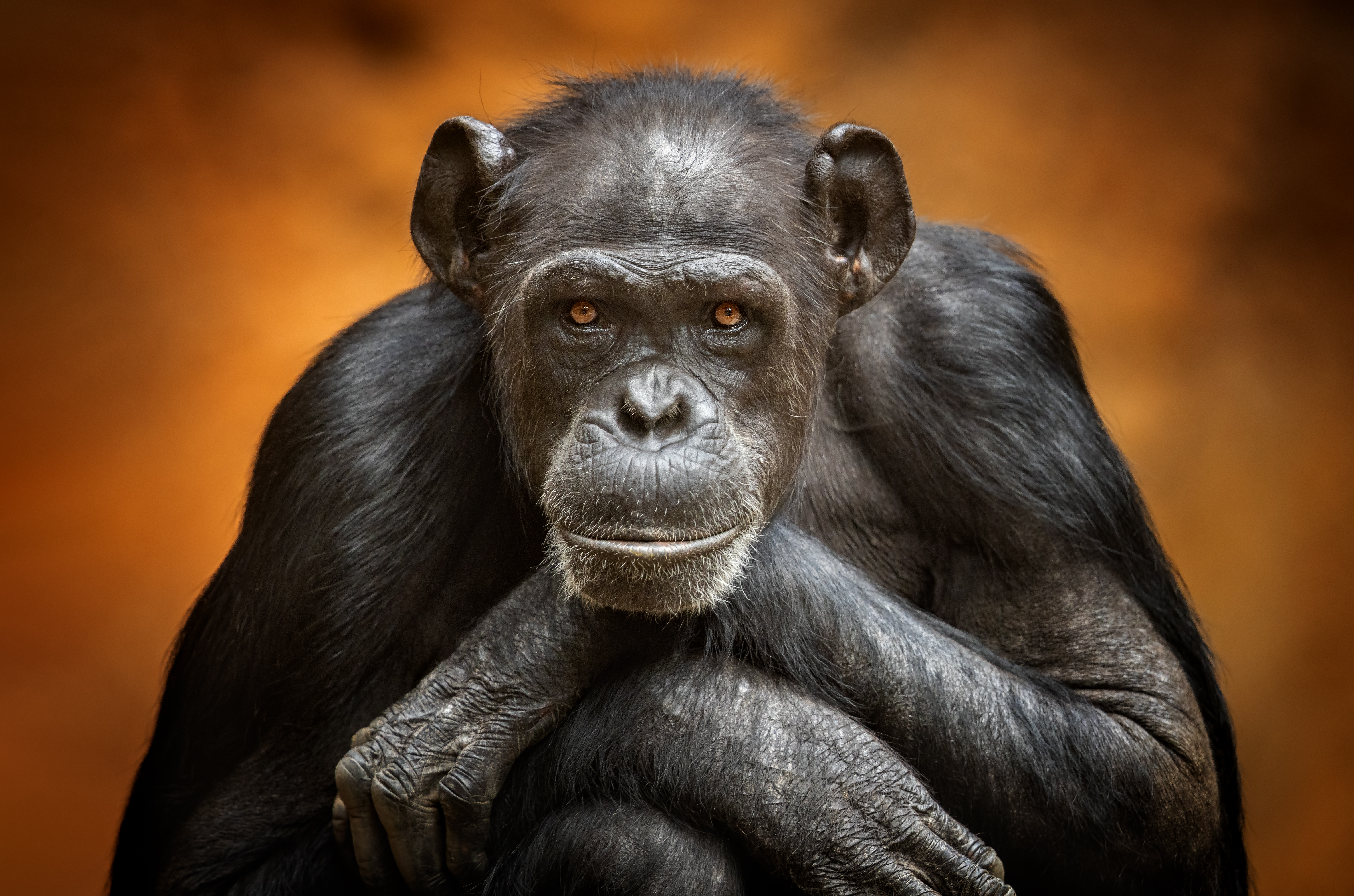
    Planet of the Apes

    Evening entertainment in an Alaskan Arctic village during the summer of 1972 was scarce; I usually played my guitar or read. So, when the mail plane dropped off a feature film, even though it had been released four years earlier in the Lower Forty-eight, I made sure I got myself to the old Quonset hut that served as the village’s common meeting place and cinema. Here’s a chapter from my upcoming memoir, Hardship Alaska, from Epicenter Press.

    Now I stood where time had no meaning, where the sun circled my days and nights, never quite dipping into the sea. I'd leave my room each morning with my guitar slung over my shoulder and cut across the short distance to St. Thomas, the small Episcopal mission on the northern edge of the village. 
    
    There was a one-sentence blurb in the church's one-page bulletin the Sunday prior to my arrival announcing my purpose for being in the village. There was no further communication about it after that, and, I would learn, no need for posting choir rehearsal or music workshop days and times. I wondered how I would attract followers without additional advertising.
    
    "Fifteen minutes before you're ready to begin," said Donald Oktalik, the village patriarch and the St. Thomas's ordained priest, "ring the church bell and see who shows up. They know you're here and want to work with you."
    
    "Just like that?”
    
    "Have faith," was all he said and went back to carving a replacement part out of whale bone for his snowmobile.
    
    I didn't have faith. I was a doubting Thomas working in a remote Arctic church named after the very same questioning apostle. Nevertheless, ringing the bell worked. And yet, the cause and effect, ring the bell and they will come, did little to bolster my faith that it would happen any time I rang that bell. At any rate, people showed up for these sessions—choir rehearsals, guitar lessons and practice with anyone even minimally interested in playing hymns for services on the temperamental electric organ.
    
    So, I'd pull the rope that rang the bell outside the church door that brought the people that became my students. I also played the weekly church service, and on my last Sunday in Point Hope we performed the folk mass I composed for St. Mary's. On another Sunday when the power had failed, I pulled out the old asthmatic missionary organ, a simple reed instrument with a shortened keyboard and bellows covered in seal skin, the original leather long since worn out and discarded. The power exerted by the bellows was no match for the single rank of tired reeds and no matter how hard I pumped on its hanging pedals, the organ could only wheeze out a barely sustainable tone. Adding chords to the melody compounded the struggle, causing the poor thing to gasp for its next breath of air each time I pumped the bellows. In a demonstration of sincere empathy, the congregation adjusted their singing out of an unexpected sense of compassion and respect for the ailing instrument.
    
    The community went out of its way to make me feel a part of the village, inviting me for suppers of cold canned vegetables and muktuk pulled out of sigulaks, square holes dug down into the permafrost which served as ice cellars. Many houses had personal sigulaks where families stored provisions, but there were larger ones, too. Each whaling crew dug deeper vertical shafts accessible by ladders and fortified with wood planks and posts that led below the tundra and provided additional storage space for large amounts of whale meat caught during the hunt. I was told that the spirits of the caught whales also resided in the sigulaks along with the meat, adding a sacred purpose to the space.
    
    The meals I consumed seemed to consist of a combination of metallic mush and rancid blubber. I learned quickly to tilt my head back while chewing the sticks of blubber so that the whale oil could find a path to my stomach while avoiding my taste buds. I may have made a big deal about it at first, using humor to deflect my early discomfort with this new taste experience, but soon I found myself eating and smiling and grateful for being part of their world and having something to eat. Meals became a daily eucharist, sacred and celebratory as we gave thanks to the sacrificed whale whose flesh sustained us.
    
    That night I walked along gravel paths in one of the oldest continually inhabited settlements in North America, passing the corrugated metal clad post office, 99766, and parked dog sleds attached to snowmobiles. I soon arrived at the World War II-era Quonset hut which now served as Point Hope's one and only movie theatre. A screen mounted on one wall faced off against rows of backless benches which, after the first few rows, grew incrementally higher on stilt-like legs. A wobbly balcony offered an unobstructed view to the screen. Weakly anchored to the floor but not to each other, the bleachers seemed to float under the half-moon arc of the structure's corrugated roof. Maintaining balance, particularly at the higher levels, was a team effort. One unexpected movement from any one bench mate could topple the entire colony. A 16 mm projector balanced uneasily on a metal shelf bolted to the back wall. To start, stop or change reels required the use of a stepladder. A single cable slid down the wall beneath the projector and across the floor making its way to a single speaker below the screen. Films were delivered at will from some unknown distributor or library in Nome or Fairbanks on the plane that carried the mail. 
    
    The audience arrived with that certain excitement of a night out with friends who haven't seen each other in some time, even though most of them had spent the entire day together. Someone offered me a hand and I was hoisted up onto one of the medium height bleachers. I immediately surrendered to the group's sense of balance as my legs dangled freely below. The simple gesture, a hand reaching out to welcome me, to be raised up, to join these intimate strangers for a couple of hours of Hollywood diversion meant everything to me at that moment. I had never been so far from home and in need of feeling connected, of being accepted. And yet here I was, at the end of the world, finding that connection, that acceptance. As our row engaged in a perpetual game of give and take in order to maintain balance, we began to know and trust our places on the bench. We seemed to breathe together, adapting to each other’s movements, protecting the whole lest one of us forgets where he was, and we all come tumbling down.
    
    The windowless Quonset provided the perfect remedy to the midnight sun outside. Someone climbed the ladder with this evening’s presentation and threaded the first reel of film through the projector. As the film wound its way through the sprockets, the operator motioned for someone in the audience to switch off the lights. Darkness gave way to the film leader’s dyslectic numeric countdown, 10, 9, 8, 7, 6, 5, 4… fade to black and then the single monophonic speaker crackled out a snare drum cadence and brass fanfare as searchlights scanned an iconic art deco monument to Twentieth Century Fox, Charlton Heston in Planet of the Apes. I struggled to hear any dialogue or follow the plot due to the increasing laughter from the audience, who seem to be finding this epic one of the funniest comedies they had seen. There came a point where I was laughing, too, not quite understanding what made the film so funny to them, yet somehow caught in a paroxysm of giggles.
  • Open Door Klinic

    Open Door Klinic

    In my prior post I featured the late photographer Stephen Cysewski and the influence his images of Alaska in the 1970s had on my writing. His photo of the Open Door Klinic at the top of this post became the memory trigger for this excerpt from Hardship Alaska.

    Here I’m recalling the second of two incidents when someone had tried to show me affection at a time when I was trying to keep my sexual orientation a secret. His gesture, I’d like to believe, had my best interest at heart. It was as if James Baldwin was whispering in my ear about the folly in trying to conceal a major part of myself from others by living a supposedly secret life. There was no secret being kept that others couldn’t already see through. The people around me had already figured it out or didn’t care. They had already accepted me just as I was.

    The second incident lasted only a few seconds but seemed to carry a deeper level of caring than going to a bar for drinks. Jamie Love, a great guy who reminded me of Arlo Guthrie, established a place called the Open Door Klinic in a house in downtown Anchorage. It targeted young people who flocked to Anchorage in the summer from the Lower 48 or outside as he called it, in need of housing. The Klinic also provided narcotic addiction counseling for those who needed it, and it was a safe place where some of my group home kids would hang out after school. It was also a place that I’d visit from time to time. I liked the atmosphere, upbeat and positive with a great group of people who lived there, communally sharing the house. I also liked how everyone pitched in to manage the day-to-day tasks of cleaning, cooking and supporting each other. Sometimes when I visited, I’d bring over a few of my albums to share—Jesus Christ Superstar, Missa Luba, Hair! and the Beatles’ White Album. 
    
    On this occasion, however, I had probably stopped by the collective to follow up on one of the kids at the boys group home. Sometimes kids would end up at the commune seeking safe harbor with Jamie while trying to sort out their lives. Jamie seemed to know when someone who stumbled into his operation was not quite ready for this kind of freestyle communal living; someone who might need to be somewhere else, someplace safer and with more structure. When Jamie referred someone to us at Alaska Children’s Services, we’d follow up with him to let him know how his referral was coping in a new setting. If it was a boy he referred and I was involved, the kid would most likely have ended up with Alice Aiken and her charges at the boys group home where I also worked as a relief counselor. Most kids made smooth transitions, in some cases from being nearly homeless after a family crisis to finding a caring and stable place to call home. 
    
    After following up with Jamie, I stopped by the kitchen to discover a guy about my age, in his early twenties, boiling water for tea. He introduced himself to me, another name I’ve misplaced, and asked if I wanted a cup of tea, which I happily accepted. Sitting at the kitchen table, we engaged in small talk, nothing too personal, probably just about the weather, until he asked about where I was from and what I was doing in Anchorage. I filled him in on all of that and in a stalling moment in the conversation, he reached over and gently touched my cheek. It was such a warm and caring gesture that I let his soft touch linger until I heard the silence in the room and jolted back from his caress to reclaim the conversation. I thought that maybe he saw something in my eyes that provoked him to reach out at that moment. Maybe, I thought, he saw a part of me I wasn’t ready to reveal just then. Or he saw a part of me he was comfortable with. The moment may have passed in seconds, but that touch, an overwhelming tenderness, has somehow stayed with me forever. There was nothing sexual about it, just the touch from another human. I could have leaned over the table for a hug but didn’t, leaving the encounter like an unfinished sentence.