Author: Buzz Proffit

  • Untuned

    Untuned

    Untuned
    
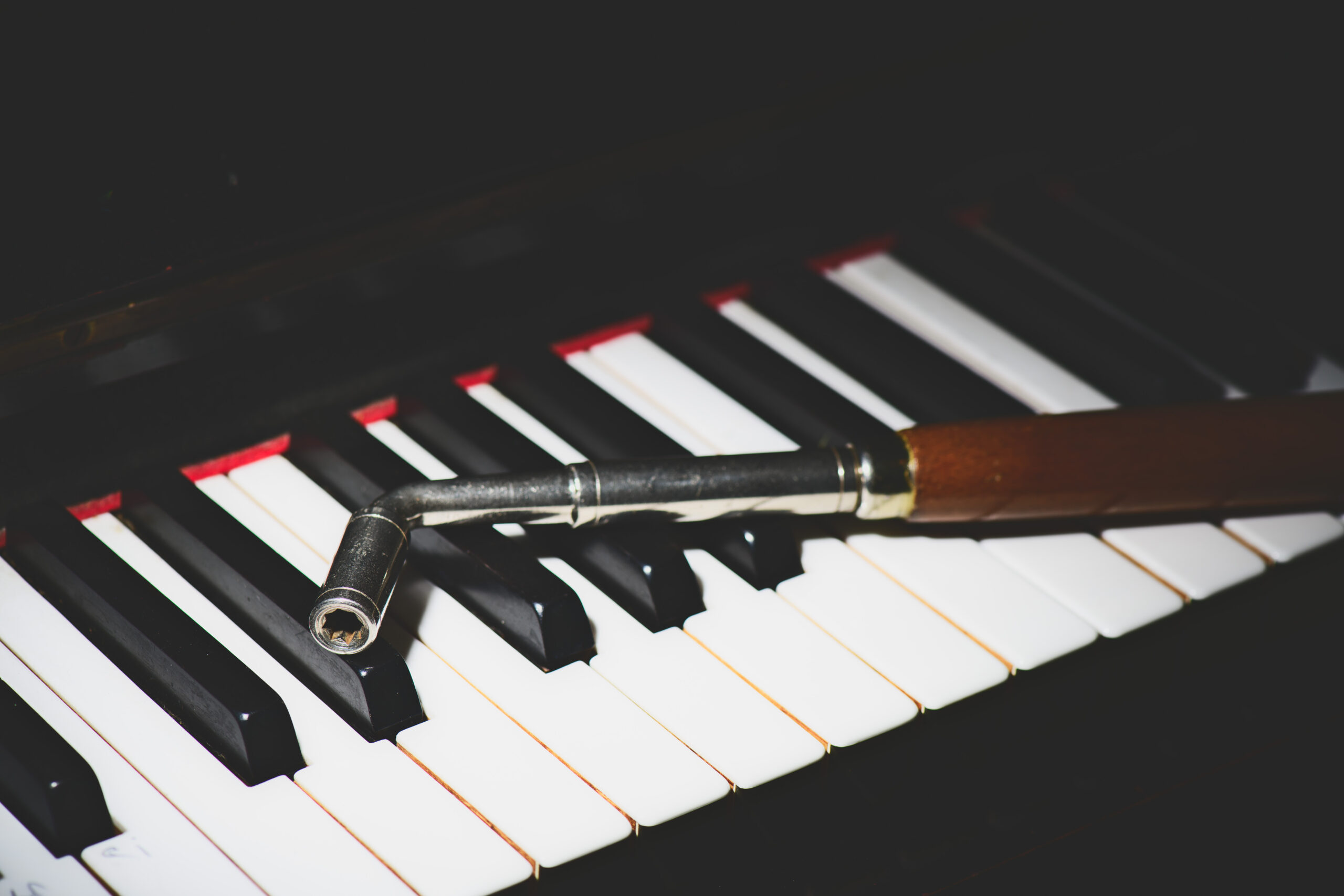
    You sit unused under the archway 
    between here and there
    next to the couch, also black.
    Don’t know why I avoid you so, 
    I love you so and when we’re together 
    we’re harmoniously transformed.
    
    Yet, something’s off. 
    
    It must be the river, 
    its dampness lingers within you 
    sliding along the skin of your tendons, 
    lubricating, loosening ever so slightly, 
    not seen but heard and so offensive 
    should I dare to touch you
    or move to reanimate 
    a long ignored suite by Bach 
    or Britten opus, 
    a piece of Mahler, 
    or Richard Rodgers.
    
    I’m not cheap so what’s the problem?
    
    The kit and key you came with sit 
    in the drawer in the kitchen corner. 
    A mitt and cream, so little effort
    and then you shine beside the matted couch. 
    
    I make the call and wait until the time arranged 
    and greet the man with tool-filled case
    to tighten taut your strings in tune 
    for just a couple hundred dollars
    
    so I can sit before you turning pages
    under the archway just us two,
    next to the couch who now requests
    a song by Stephen Sondheim. 

    Photo credit: michelangeloop

  • Flesh Eater

    Flesh Eater

    “The trouble with a secret life is that it is very frequently a secret from the person who lives it and not at all a secret for the people he encounters.”

    James Baldwin, Another Country

    That’s how James Baldwin describes the fallacy of believing he is living a secret life and how it’s only a secret to himself and not at all to those around him, who know him or who encounter him each day. For those who see the secret before the dissembler does, they have a way of laying him bare, sometimes to cause harm, sometimes not. My being laid bare came with a name scrawled on a boys’ locker room wall in an Illinois high school in 1965.

    Flesh Eater
    
    Whispered around me, irritating
    like a cloud of gnats 
    swirling around my head
    in the sheltered harbor of
    a classroom; in hallways
    with no teachers about,
    shouted loud enough to sting,
    again, again, again.
    
    Flesh Eater
    
    Conceived
    months before,
    in a ski lodge bed
    above the Mississippi,
    but never uttered,
    the name saved for later,
    by a boy
    with a felt tip marker
    sketching dreams
    late at night, 
    wide awake, 
    a whispered conversation.
    
    Ever done it with a guy?
    My queried passion bred
    an answer 
    on proper technique that
    he expected. 
    Right Guard-laced 
    sweat, metallic taste, 
    an almost heaven
    followed by shame.
    
    A rural roadside ditch, 
    gravel scarring knees
    my only footing,
    leaning in, caressing
    backseat-straddled thighs
    as rows and rows of corn stalks
    penetrate spring soil.
    
    For the last time,
    still nameless, still safe
    but for the
    interrupting stillness,
    an eerily green sky,
    a felt tip marker in his hand.
    
    Like Dorothy 
    outrunning 
    the twister,
    outrunning fate,
    but no cellar shelter waits,
    only my mother, 
    an agitated and angry Auntie Em, 
    wondering why I’m late 
    where I was, 
    why my knees are caked in dirt
    as the town's sirens wail: 
    take cover. 
    
    Names are born
    on locker room walls
    and sometimes it’s 
    yours, no matter
    how much you deny it,
    and you learn what you are
    in third period
    English
    right before lunch.
    
    Flesh Eater

    Photo credit: Stephen Barnes

  • Wonders of the Invisible World

    Wonders of the Invisible World

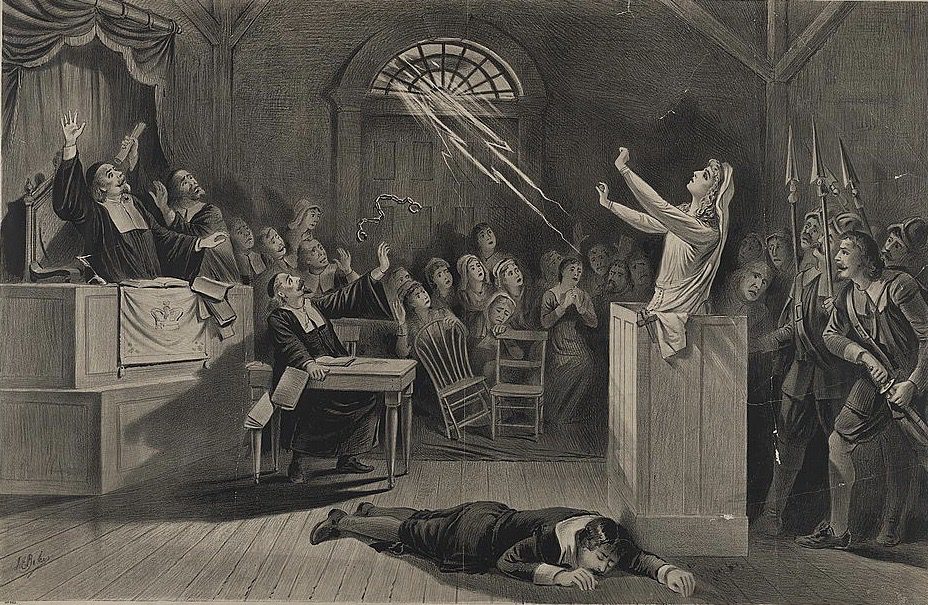
    Back in January I posted a piece about my mother, Venom and Velocity. I wrote about her fascination with tornadoes and what seemed to be her uncanny ability to attract animals, including snakes, and in the most unlikely places. That got me thinking about my 8th great grandmother, Susannah North Martin, who was three times accused of witchcraft between 1669-1692. She was finally found guilty and sentenced to hang on July 19, 1692 in Salem, Massachusetts. I can’t help but think whether my mother, Susannah’s 7th great granddaughter, would have also been suspected of witchcraft during that time because of her ability to talk with the animals. At any rate, I’ve been working on this poem, truly a work-in-progress at this point, but thought I’d share it with you here.

    Susannah wasn’t the only person delivered to the gallows on that day—Sarah Good, Elizabeth Howe, Rebecca Nurse and Sarah Wildes were also hanged.

    Wonders of the Invisible World
    
    “Most impudent, scurrilous, 
    and wicked Wonder of the Invisible World”
    Susannah’s named
    as children gnash and fit 
    bewitched for show
    before her.
    Yet no familiars float
    nor hungry ghosts invade
    their skin despite their
    deceitful shenanigans.
    
    “Explore my flesh for what it’s worth,
    no witch’s teat concealed
    in freckle or on mole
    you’ll find.”
    
    While Mather’s pen
    scabs Salem’s plot;
    in defense Susannah speaks.
    “My thoughts are my own,
    this virtuous and holy life,
    my only sin— 
    not guilty,”
    her only plea.
    
    “Guilty!” 
    came back loud and clear
    and off to jail Susannah went
    until the Nineteenth of July,
    when Good, Howe, Martin, 
    Nurse and Wildes 
    to Proctor’s Ledge were led
    and noosed
    until they hung there dead.
    
    Then tossed below 
    where gallows stand
    into a gaping
    stone crevasse,
    no soil to blanket
    jutting limbs,
    no words of comfort,
    no amens,
    no closing hymns or prayers
    for these so loathed,
    yet held no sin,
    these most impudent, 
    scurrilous, 
    and wicked 
    Wonders of the Invisible World.

    Photo credit: The Witch No. 1, Library of Congress

  • First Communion

    First Communion

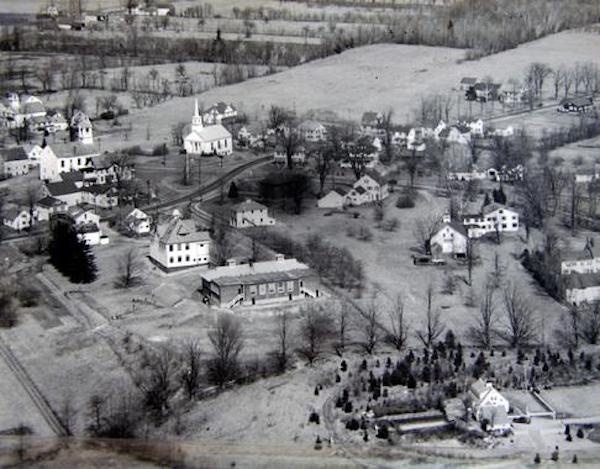
    My parents had me christened in the Congregational Church across from town hall on the edge of the village commons in the town of Lunenburg, Massachusetts. The church was where I performed in my first piano recital in the fellowship hall below the sanctuary. I probably played something out of John Thompson’s Modern Piano Course or maybe it was something even more fundamental from his Easiest Piano Course, the books with the illustrated goblins pointing out clefs and time signatures, notes and rests. It was where I celebrated my first communion. The no-frills sacrament wasn’t a special affair. I didn’t have to wear a new suit bought expressly for the occasion and I didn’t receive a certificate stating that I had crossed some spiritual milestone. It was probably just an accident of fate, not faith, that caused me to be there on that Sunday morning.

    As a child I attended an austere Congregational church with my grandmother in Lunenburg. Grammy somehow thought I was a holy child and got me a monthly subscription to an Oral Roberts’ magazine for children. Roberts, a Choctaw televangelist, had a worldwide following and was known for his ability to perform healing miracles; he himself having been healed of a severe stutter and tuberculosis when he was seventeen. 
    
    On one Sunday, I must have been around six years old, she took me to my first Wonder Bread and Welch’s grape juice communion, an event that only happened four times a year at this local church, most Sundays intended for preaching the Word. The bread was served on silver-plated platters passed down each pew where every person took a piece and held it patiently in their palms until everyone in the congregation received theirs. The grape juice followed in a similar serving tray but one equipped with slots to hold tiny individual cups filled with the purple liquid.  Once everyone was served, and as if on cue, the entire congregation popped the small squares of spongy bread in their mouths, chewed and swallowed and then drank the juice from the tiny glass cups in unison; like men at some corner tavern nibbling on bar nuts then in unison downing shots of bourbon that had been lined up and waiting along the bar top. When everyone had finished, the tiny glasses were inserted in drilled out holes in a small wooden shelf screwed to the back of the pew in front of them. I joined the others in drinking the juice, but forewent eating the cubed piece of bread, instead squeezing it in my small fist, holding it there until the service ended. Once outside, I tossed the now pulpy lump behind a shrub near the steps of the church. I was afraid that if I ate it, Jesus would pop out of my mouth on the ride home in my grandmother’s black ’48 Chevrolet Fleetline. To this day I still think about that piece of bread every time I pass the church on my way to North Cemetery to visit the family plot or attend a relative’s funeral. 

    Photo: Lunenburg Historical Society

  • Hold Your Breath

    Hold Your Breath

    I went to a small choral music school, Westminster Choir College, during the late 1960s. I enjoyed walking into town leaving the campus and turning right onto Hamilton Street until it became Wiggins. When I passed by Princeton Cemetery, I’d love picking up a stick and running it across the iron fence bars as I walked by, something about the percussive sound and feel of the stick in my hand was reassuring. I also held my breath until I had safely reached the other side of the graveyard. Just in case a parasitic spirit was looking for an unsuspecting host. That cemetery always made me think of my first gin and Wink, a tart cocktail that was offered to me by an upperclassman who lived off campus in a rented boarding house room on Madison Street. One night, loopy after consuming more of the grapefruit flavored potion than I should have, I somehow got turned around as I made my way back to campus and ended up in the cemetery at Aaron Burrs’ grave. Somebody on the sidewalk—it must have been another Choir College student—seeing me on the wrong side of the fence called out, “Westminster’s this way,” and I followed him home.

    Hold
    	your breath
    passing cemetery’s view
    to the corner your safe
    a break
    	would prove
    the first to go
    might well be you
    
    A children’s game
    on a summer afternoon
    as the sun shines through
    	iron
    		fence
    			casting
    				bars 
    on the sidewalk
    
    		—March 1968